Who came into the garden last night?
Nightjar is a garden camera that watches all night under infrared, keeps only the visits, and tells you in the morning who came by.
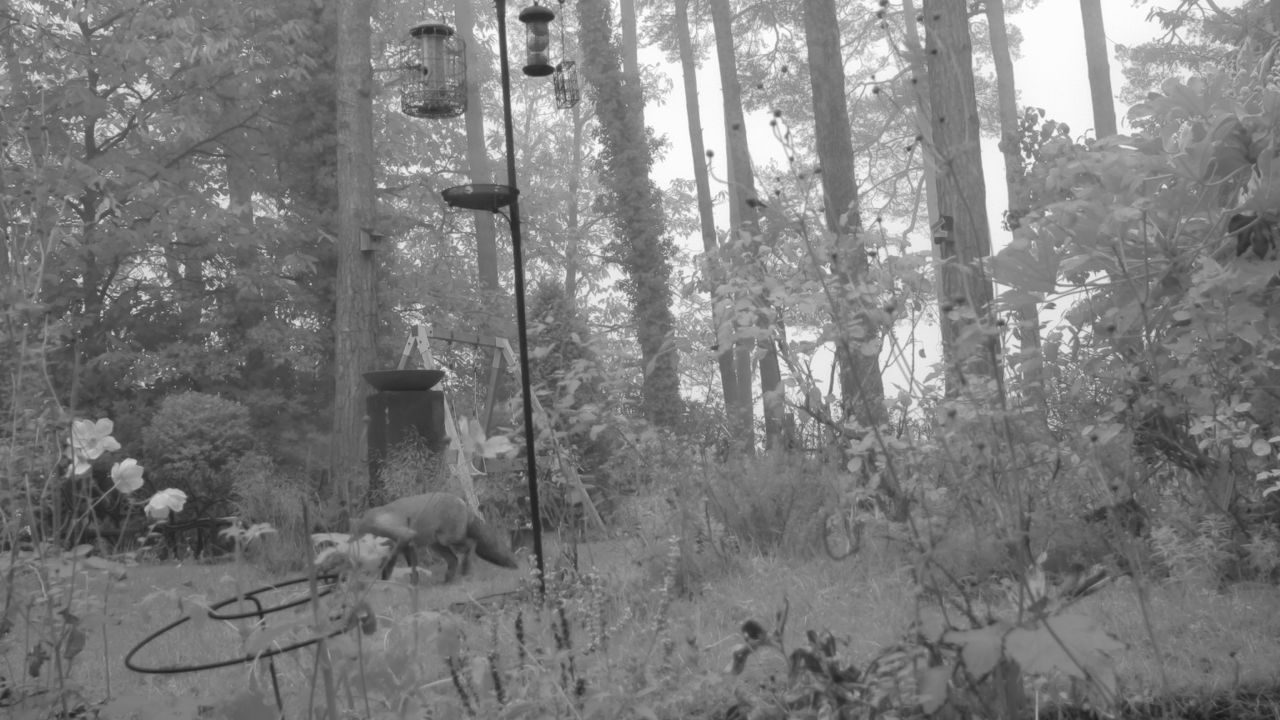
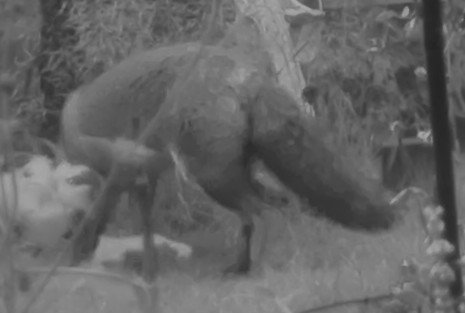
This morning's fox, as the camera kept it. Every picture on this page is a real visit.
166 times something moved. Five of them were a fox.
That was last night, from 4 pm to 9 am. A detector fires at a lot: the base of the feeder pole looks like an animal at 3 am. Nightjar learns which spots in your garden stand still, asks a second model what each visit was, and leaves the last word to you.
- Fox, named in the app (5)
- "A mammal", the camera thinks (6)
- Not named yet (120)
- Marked "nothing there" (35)
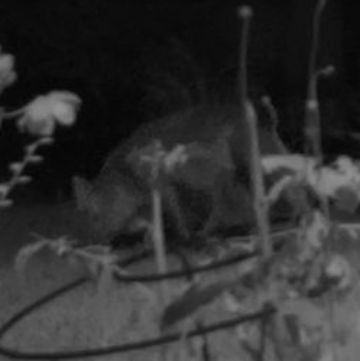 21:42
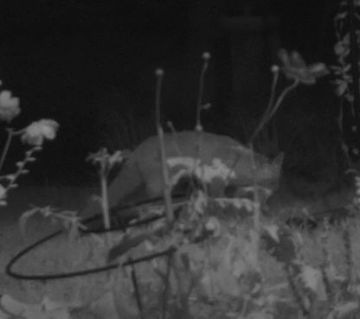 22:35
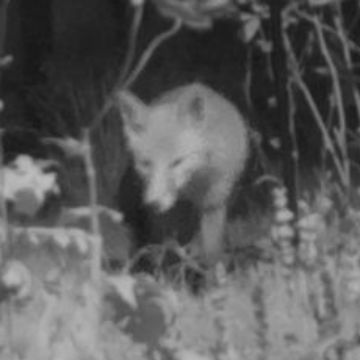 23:55
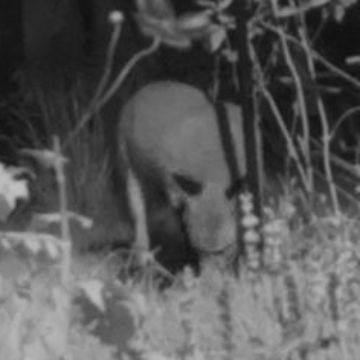 06:19
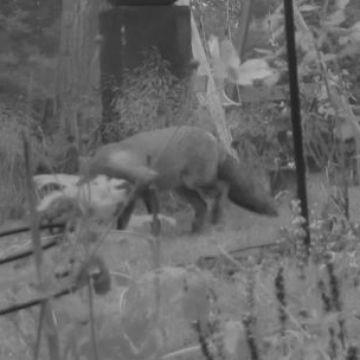 07:09
In the morning, the night is a card to turn over.
The iPhone app keeps nothing on the phone. It plays the camera's clips while you watch them.
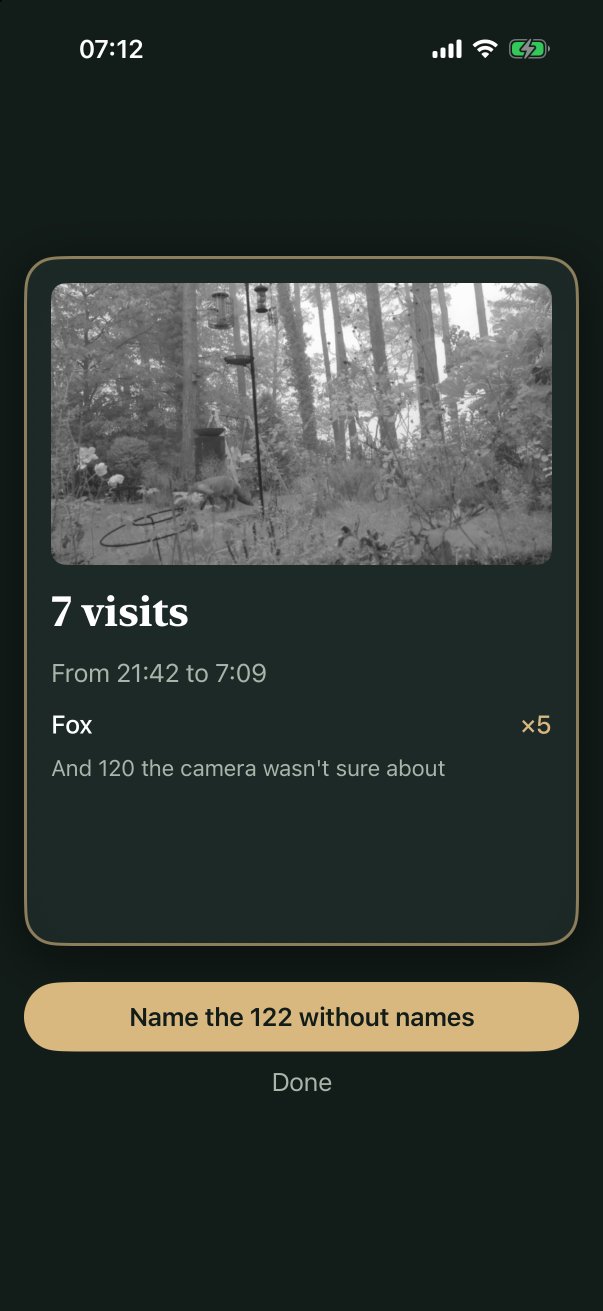
Last night in the garden
From 5 am the app has a card waiting, face down. Turn it over for the night's best picture, how many came, when, and who. The camera's guesses are marked as guesses, and the visits it couldn't place are counted apart instead of crowding the list.
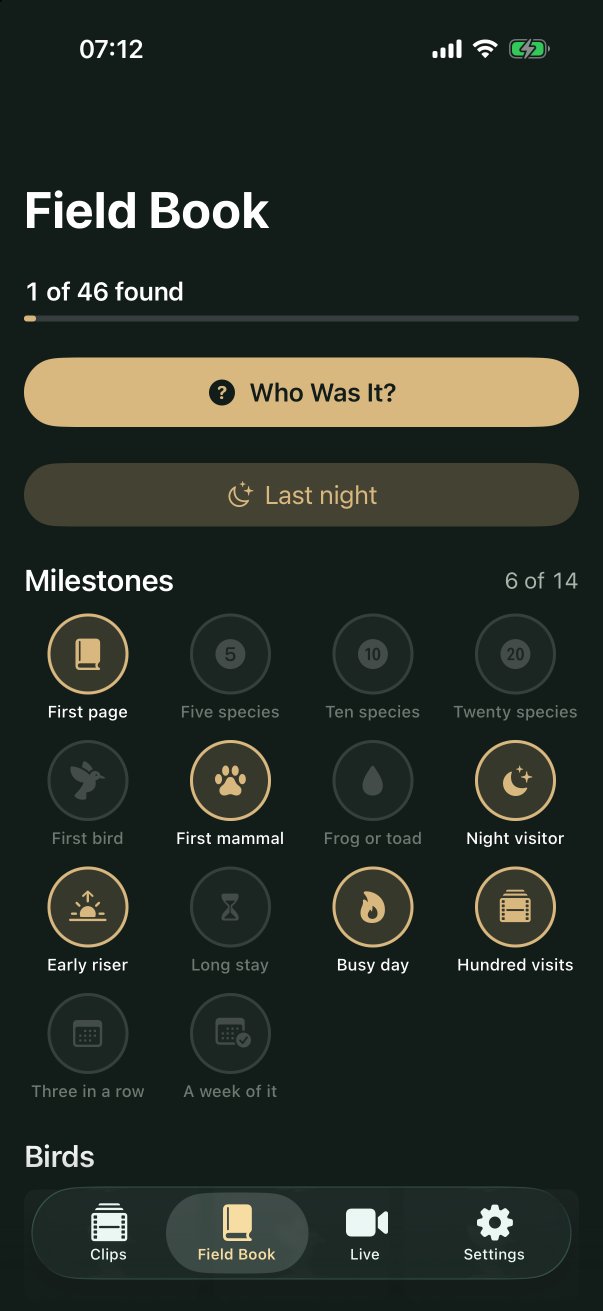
A Field Book that fills itself in
Every species you name gets a page, with when it first came, how often, and its best visit. There are 46 pages for a British garden, and milestones the garden earns for you: a night visitor, an early riser, a long stay.
Who Was It?
A quick round of naming the visits nobody has named. Call it, and only then does the camera say what it thought. "Not sure" never costs you anything, because your names are what the garden's own model will learn from, and a guess would teach it wrong.
Alerts worth picking the phone up for
A camera that buzzes at every moth gets switched off. Nightjar waits for a second opinion on each visit, about a minute, and only then decides.
- New for the Field Book? Something you haven't named before. Always, once.
- A long visit. Two minutes or more, usually while it's still there.
- First visitor tonight. The night's first animal.
- Someone in the garden. At once, if you switch it on, with no picture. Tap it to watch live.
At most one wildlife alert every 15 minutes, apart from a new species, and none in your quiet hours.
What happens between dusk and the card
Everything runs on a Raspberry Pi in the house. The pictures never leave it, except to your own phone.
It watches
A NoIR camera behind the patio window, with an infrared floodlight outside, five frames a second all night. Frames stay in memory.
It spots
MegaDetector, a camera-trap model, looks for animals and people on a Hailo AI chip. A track has to move before it counts.
It keeps the visit
Only when something stays does a clip get written, with a few seconds either side and sharp close-ups by day.
It guesses
SpeciesNet, trained on millions of camera-trap pictures, says what it thinks the visit was. Or says nothing.
You name it
Your name is the one that counts. It fills the Field Book, and in time teaches the garden its own model.
- Computer
- Raspberry Pi 5
- AI chip
- Hailo-8, on a Pi HAT
- Camera
- Camera Module 3 NoIR Wide
- Night light
- 850 nm infrared floodlight, outside
- Models
- MegaDetector v6 (MIT) and SpeciesNet (Apache 2.0)
- Reaching it
- Tailscale, from your own devices only
- App
- iPhone and iPad
A camera pointed at a garden, not at people
Clips stay home
Pictures live on the Pi. The app plays them over your own private network and saves none of them on the phone.
People are kept apart
A visit with a person goes in its own list, is deleted after 30 days, and is never used for wildlife, training or species work. There is no face recognition, and there never will be.
Paired devices only
The live view and clips need a device you've paired with a one-time code, and every viewing is logged.
Alerts carry words
Apple delivers the text. The picture comes to your phone straight from the camera, not through anyone else.